Choosing Safe, Sleep-Friendly Bedroom Lighting: A Practical Guide
A thoughtful lighting plan can transform a bedroom from a place of mere sleep into a sanctuary of rest, safety, and mood. This guide explores how to layer ambient, task, and night lighting to support circadian rhythms, reduce glare, and accommodate every age—without leaning on hype or sales pitches.
In a world that moves at a 24-hour tempo, light is one of the most powerful environmental cues we have. Proper lighting helps regulate melatonin production, align睡眠-wake cycles, and create a sense of security at night. The guidance here remains brand-agnostic, rooted in sleep science and practical design, and attuned to diverse households—from newborns to elders.
Why Light Matters for Sleep Health
Light informs the body about when to wake and when to wind down. Exposure to bright, blue-enriched light in the evening can delay the onset of melatonin, making it harder to fall asleep. Conversely, warmer, dim lights in the hours before bed can signal the brain that it is time to relax. A well-planned lighting scheme supports sleep through:
- Circadian-friendly color temperatures: cooler light in the morning and warmer light in the evening.
- Gradual transitions: dimming strategies that avoid sudden brightness shifts at night.
- Glare reduction and contrast: layered light that reduces eye strain and enhances safety in the dark.
- Accessibility and safety: lighting that assists aging-in-place, caregiving, and nighttime navigation.
Layering Lighting: Ambient, Task, and Night Lighting
Effective bedroom lighting is rarely a single fixture. It is a layered system that can adapt to mood, tasks, and health needs. The following layers form a practical framework:
- Ambient lighting: soft, overall illumination that fills the room without glare. Think of it as the stage lighting for the sleep space.
- Task lighting: directional light for reading, dressing, or nighttime routines. This layer should be adjustable and shielded to prevent direct glare into eyes.
- Night lighting: low-level illumination for safety and accessibility during late hours. A night-light should remain unobtrusive and non-disruptive to sleep.
By judiciously combining these layers, a bed environment becomes adaptable: bright enough for a morning routine, subdued for late-night soothing, and safe for stepping out of bed in the dark.
Practical, Brand-Agnostic Considerations
When selecting fixtures, bulbs, and controls, prioritize evidence-based design over aesthetic hype. Consider these practical benchmarks:
- Color temperature: aim for cooler light (around 4000–5000K) in the morning hours to promote alertness, and warmer light (2700K–3000K) in the evening to cue winding down.
- Dimming capability: ensure all main lighting sources can be dimmed and scene-focused. Dimmers reduce glare while preserving color accuracy.
- Blue light management: reduce blue-rich light after sunset. If you cannot avoid it, complement with warm-toned bulbs or filters.
- Glare control: fixtures with diffusers or shielding minimize eye strain, especially for sleepers who are sensitive to light or for children.
- Accessibility features: consider smart controls or simple, tactile switches for aging-in-place and caregiving contexts.
Lighting for All Ages and Stages
A well-considered lighting plan must account for diverse needs—infants, adults, and aging adults all interact with space differently. For children, adjustable task lighting for reading and nighttime routines can foster independence while keeping safety in view. For adults, a flexible setup supports daily rhythms and work-from-bedroom routines where appropriate. For seniors or caregivers, consistent, glare-free pathways and motion-activated safety lighting reduce fall risk without disrupting sleep.
In practice, a representative setup may include dimmable overhead ambient lighting, a bed-side dimmable lamp for reading, and a soft night-light placed along pathways. The goal is a cohesive system that can transition from bright morning brightness to a tranquil, sleep-supporting glow as night descends.
Three Key Figures in Lighting Philosophy Across Time
Across centuries, thinkers and designers have shaped how light influences how we rest. Here are three pivotal figures from different epochs who illuminate our understanding of light in living spaces.
Ancient Compassion for Light: Lucretius (1st century BCE)
In classical thought, the interplay of light and human perception shaped the way spaces were experienced. Lucretius’ exploration of sensory perception and the way light travels through space influenced architectural thinking long before electric lighting. While he did not discuss sleep-specific lighting, his emphasis on natural light as a virtue of humane living echoes in modern daylight-mocused design and circadian-minded interiors. His legacy invites us to consider how daylight exposure sets the stage for daily rhythms, even within a modern, enclosed sleeping chamber.
Industrial Light and Behavioral Insight: Thomas Edison (1847–1931)
Thomas Edison’s innovations in electric lighting catalyzed a new era of domestic life. The ability to illuminate bedrooms beyond daylight hours reshaped evening routines, reading habits, and the social fabric of homes. Edison’s era marks a shift toward controlled light cycles—an early anchor for circadian considerations that modern researchers continue to refine. In bedspaces that prioritize health and safety, reliable, adjustable lighting became a non-negotiable tool for comfort and safety at night.
Contemporary Ecology and Human-Centric Lighting: Valérie Gibaud (late 20th–early 21st century)
In contemporary discourse, lighting design often foregrounds human-centric concepts: perceptual comfort, energy sustainability, and health. Designers and researchers like Valérie Gibaud have contributed to the idea that lighting should adapt to human needs, not force adaptation to harsh, uniform illumination. Today, this translates into layered, adjustable systems in bedrooms that support circadian health while meeting practical daily needs, such as nighttime safety and reading tasks without compromising sleep quality.
Key Takeaways for a Sleep-Friendly Bedroom
- Use a layered approach: ambient, task, and night lighting should work in harmony, not isolation.
- Favor warmer color temperatures in the evening and brighter, cooler light in the daytime to align with natural rhythms.
- Choose dimmable fixtures and consider motion-activated safety lighting for late-night navigation without waking others.
- Design with accessibility in mind to accommodate aging in place, caregiving, and children’s needs.
- Keep a simple, consistent lighting plan to reduce cognitive load and support healthier sleep habits.
Closing Thoughts
Lighting is more than ornament; it is a timekeeper, a safety net, and a companion in the quiet hours between dusk and dawn. By layering lighting thoughtfully and prioritizing circadian-friendly choices, a bedroom can become a sanctuary that nurtures sleep, health, and safety for all ages. This non-commercial guide—rooted in sleep science and human-centric design—offers practical steps to illuminate a room while minimizing disruption to the very rest we seek each night.
Product Spotlight: A Balanced Pillow Foundation for Nighttime Comfort
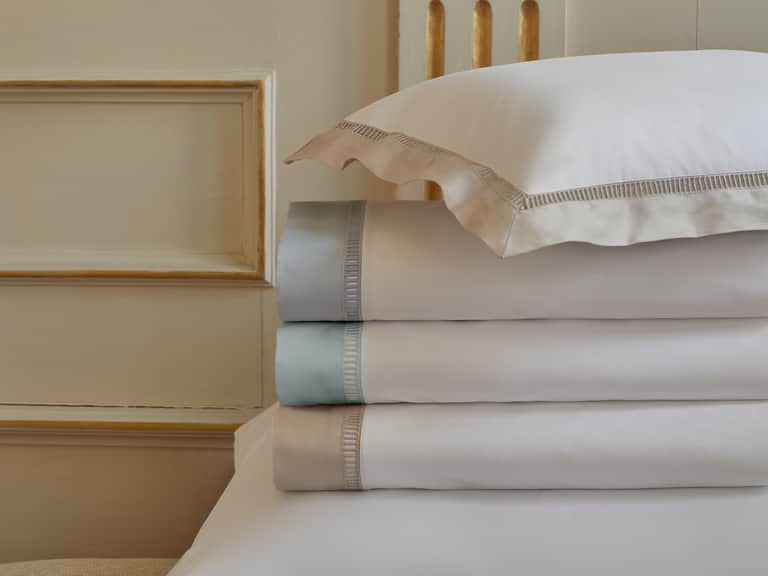
In pursuit of a sleep-friendly environment, a comfortable pillow can complement a well-lit room by reducing wakeful adjustments and supporting spinal alignment. The Bovi Escada Pillowcases and Shams offer a crisp base for a bed’s aesthetic while ensuring breathable, cool comfort that doesn’t add to nighttime heat or moisture buildup. While lighting remains the primary focus of this guide, bedding quality and the tactile experience of the sleep space interact with lighting to influence mood and睡眠 quality.
Bovi Escada Pillowcases and Shams
The Escada Pillowcases and Shams are crafted from 100% cotton percale with a crisp, breathable 200-thread-count. They offer a cool, smooth matte finish that complements a calm, sleep-friendly atmosphere. Available in Blue, White, Silver, and Latte, they provide a versatile foundation for bedding that harmonizes with low-glare, layered lighting. The percale weave is hotel-like in its freshness and airflow, enhancing comfort at night without contributing to heat or moisture buildup.
Image: Escada Pillowcases Detail
Note: Images are representative product visuals provided for illustrative purposes within this editorial context. Lighting and bedding together shape the nightly experience.
About This Guide
This article is part of bedstore.org’s educational initiative. It articulates non-commercial, science-based guidance for sleep health and bedroom ergonomics, with an emphasis on safety, accessibility, and practical implementation. For readers seeking deeper understanding, we invite exploration of reputable sleep health organizations and design standards that inform healthy, sleep-ready environments.